By Guest Author
16 March 2021
In this Q&A, Elaine Toomey, University of Limerick, and Ksenija Zečević, National University of Ireland/University of Ljubljana, discuss the complexities, covering the challenges and the opportunities to practising open science for early career researchers in health research in Ireland. Read on to learn about their findings of the views and experiences of ECRs, the first qualitative study to explore this, published in their Research Article on HRB Open Research. Toomey and Zečević share their recommendations for adequately preparing researchers for an open research environment early on in their careers.
By Guest Author
26 February 2021
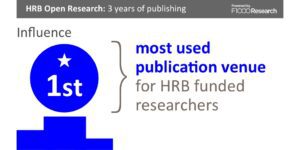
At the Health Research Board (HRB), we pride ourselves on leading innovative approaches to underpin health research. So, to celebrate the 3rd birthday of our publishing platform, HRB Open Research, we showcase highlights from our endeavors and celebrate how more of the research community are embracing open research and its growing popularity in Ireland.
By Guest Author
24 February 2021
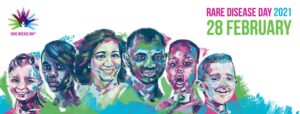
‘Rare is many. Rare is strong. Rare is proud.’ Rare Disease Day takes place on 28th February, and for this global awareness day we hear from Suja Somanadhan, UCD School of Nursing, Midwifery and Health Systems, University College Dublin, Ireland, who educates us about rare diseases and informs us about Rare Disease Research Partnership (RAinDRop), of which she is both the founder and lead, responsible for bringing together a wide variety of diverse voices in the rare disease community in Ireland.
By Guest Author
29 January 2021
Today, we share the Q&As with three authors who have published in the Coronavirus Collection for readers to gain deeper insight into the undergoing investigations. The three interviewees discuss three valuable projects; one to influence health policies, one to safeguard human participants in clinical trials, and one to provide much needed mental health support to healthcare workers on the frontline.
By Guest Author
14 December 2020
As 2020 draws to a close, we thought we would share some of the projects that researchers have been busy working on to help improve people’s health and wellbeing during the Covid-19 pandemic. So far, we have 19 articles published in the Coronavirus collection, which was set up to highlight research related to coronavirus on our publishing platform, HRB Open Research. Read on for the article highlights, and to hear from the researchers we interviewed to discuss the work they have published as part of this funding call.
By Jack Nash
07 December 2020
As Editorial Assistants, our peer reviewers will often say to us “I won’t review the Study Protocol, but I will review the results”, which made us wonder why Study Protocols are disregarded by some? In this blog post, Charlie Vickers, Senior Editorial Assistant, explains why Study Protocols are important – not only for science in general, but as part of the HRB Open Research model too.
By Guest Author
10 November 2020
Mental health is a growing public health concern in Ireland, where 18.5% of the Irish population reported having a mental health illness, such as depression, anxiety and bipolar disorder. Cognitive Behaviour Therapy (CBT) is the most common treatment to help people struggling with mental health and mood disorders. However, CBT is not always the preferred […]
By Guest Author
15 October 2020
The Health Research Board (HRB) has been at the forefront of public and patient involvement (PPI) in health research in Ireland. We are delighted to announce the launch of the PPI Collection on HRB Open Research Platform. In this blog, we hear from the collection advisors, Éidín Ní Shé, School of Population Health, University of New South Wales, and Avril Keenan, Health Research Charities Ireland, who tell us why this collection is so important and how they anticipate that these papers will be a source of guidance and inspiration to many others.