For far too long, people with myalgic encephalomyelitis (ME) have been routinely dismissed, ignored, or misdiagnosed by the medical profession. A new Patient and Public Involvement (PPI) driven research study, published on HRB Open Research, led by John Cullinan, Orla Ní Chomhraí, and Tom Kindlon sheds light on how this can impact those living with ME and their carers. It also has important implications for how we treat long COVID-19 patients.
A team of researchers from University College Dublin (UCD) are exploring how the human animal bond impacts children’s wellbeing in a children’s hospital. The Principal Investigator of this PhD study is Rachel Howe.
In this blog post, Rachel tell us more about AAI, the potential benefits of therapy animals for children and parents, and discusses the UCD group’s research project to determine where and why animal interventions take place.
In this post, Kate Frazer from University College Dublin, Ireland, shares how the HRB and their fellowships have helped transform her research career and tells us about her understanding of smoking behaviour and efforts to help stop smoking. Read the blog post to learn more about the project and why public and patient involvement is playing a pivotal role.
In this Q&A, Cathal Seoighe, the scientific director of the SFI Centre for Research Training in Genomics Data Science, explains why genomics and clinical genetics have fallen behind other countries and shares his recommendations for a national genomics health strategy, and how this could benefit patients and the public.
In this Q&A, Maria Kelly, an IT specialist working part-time with the National Cancer Registry in Cork and PhD student at the University of Limerick, discusses why utilizing health data is important for research purposes, as well as the challenges she faced when conducting her own research.
Catherine Darker, Associate Professor of Health Services Research at Trinity College Dublin, Ireland, is leading a research project to explore the implications of COVID-19 on the public health jurisdictions of the Republic of Ireland and Northern Ireland. In this interview, Catherine tell us more about the project and their plans, as set out in their Study Protocol, published on HRB Open Research on creating a toolbox for public health messaging to guide decision makers in their approach to further waves of COVID-19 or for future epidemics.
In this Q&A, Elaine Toomey, University of Limerick, and Ksenija Zečević, National University of Ireland/University of Ljubljana, discuss the complexities, covering the challenges and the opportunities to practising open science for early career researchers in health research in Ireland. Read on to learn about their findings of the views and experiences of ECRs, the first qualitative study to explore this, published in their Research Article on HRB Open Research. Toomey and Zečević share their recommendations for adequately preparing researchers for an open research environment early on in their careers.
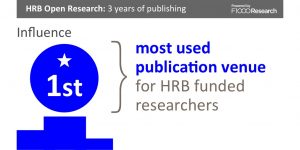
At the Health Research Board (HRB), we pride ourselves on leading innovative approaches to underpin health research. So, to celebrate the 3rd birthday of our publishing platform, HRB Open Research, we showcase highlights from our endeavors and celebrate how more of the research community are embracing open research and its growing popularity in Ireland.
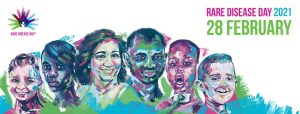
‘Rare is many. Rare is strong. Rare is proud.’ Rare Disease Day takes place on 28th February, and for this global awareness day we hear from Suja Somanadhan, UCD School of Nursing, Midwifery and Health Systems, University College Dublin, Ireland, who educates us about rare diseases and informs us about Rare Disease Research Partnership (RAinDRop), of which she is both the founder and lead, responsible for bringing together a wide variety of diverse voices in the rare disease community in Ireland.
Today, we share the Q&As with three authors who have published in the Coronavirus Collection for readers to gain deeper insight into the undergoing investigations. The three interviewees discuss three valuable projects; one to influence health policies, one to safeguard human participants in clinical trials, and one to provide much needed mental health support to healthcare workers on the frontline.