One step ahead of the game – HRB Open Research turns two
| 28 February, 2020 | Patricia Clarke |

Look how we’ve grown – HRB Open Research has been publishing articles for two years, and through that time we’ve seen a positive shift to adopting open research as we’ve been increasing in popularity. For our 2nd birthday, we’re sharing our highlights and thinking about how the community are moving with the times and choosing to publish openly.
“The times they are a changing”, as the song goes, and we feel that is certainly the case with open research. The transition to publish openly is gaining ground in Ireland, where the Health Research Board (HRB) has been leading the way through the innovative HRB Open Research publishing platform. We’re proud to see so many organisations and agencies uniting to support this approach through the National Framework on the Transition to an Open Research Environment.
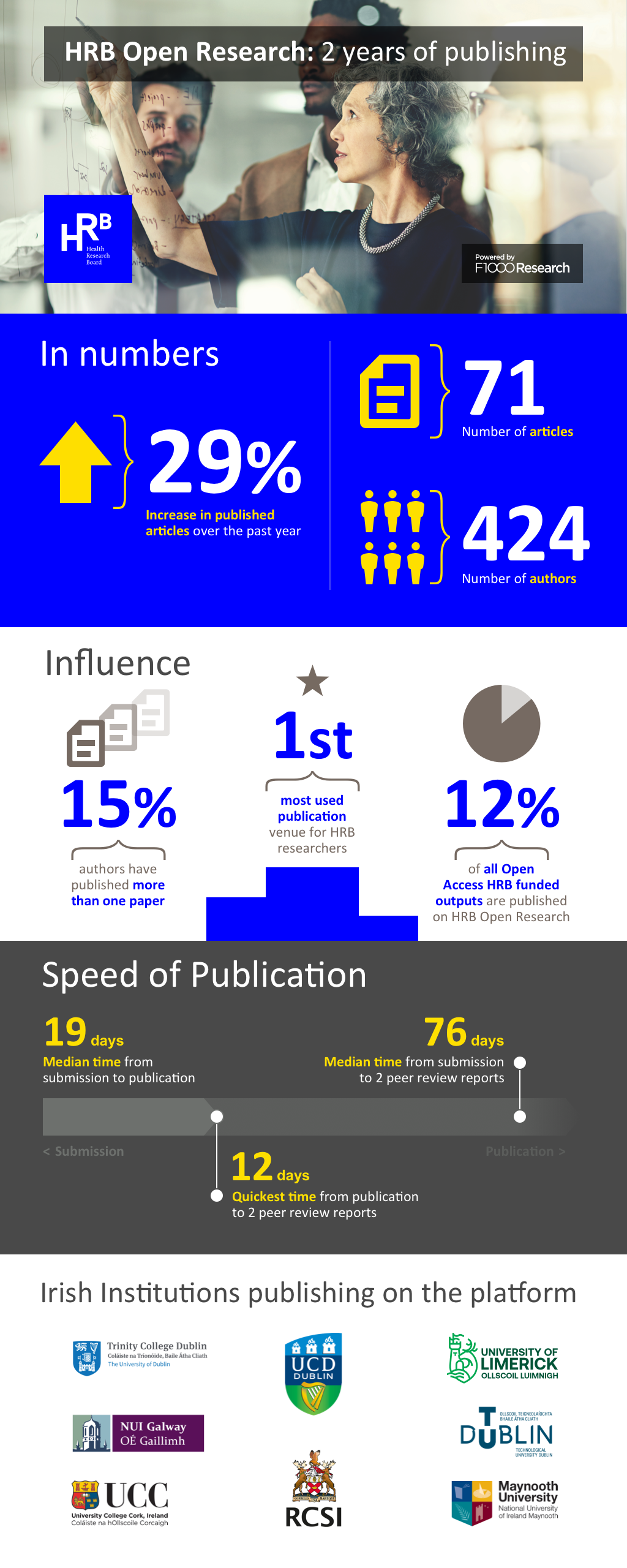
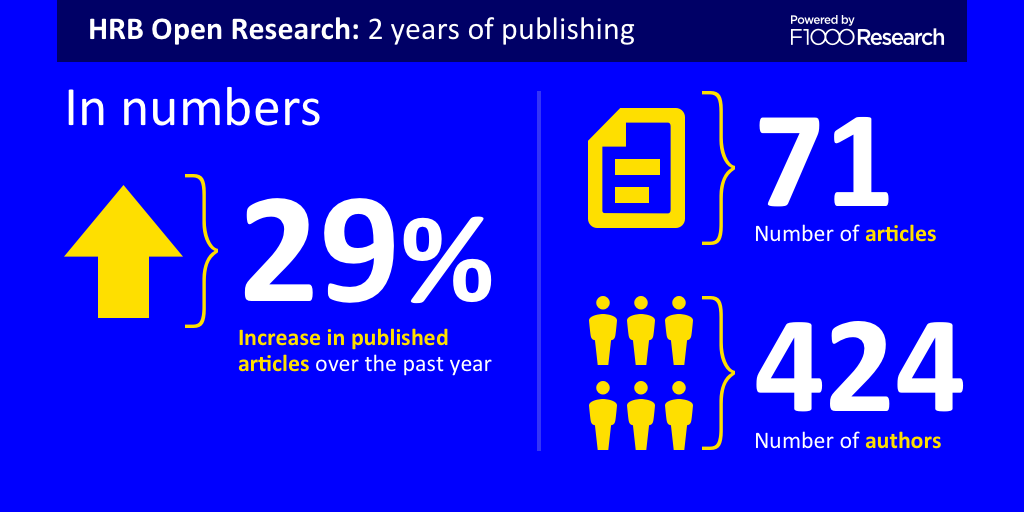
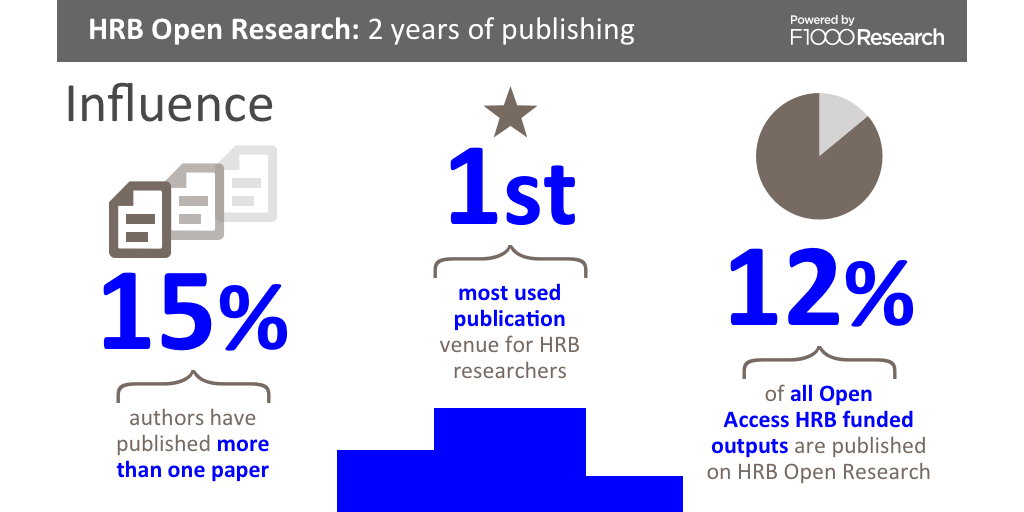
We’ve always considered HRB Open Research to be a game changer for Ireland. As we celebrate just two years of publishing research, we’re delighted with how much the platform has grown. For the second year running it is the most used venue for HRB funded researchers, and last year, we saw a 29% increase in the number of articles published. A total of 424 authors have now published with us, a trend we hope will continue with many more HRB-funded researchers choosing to submit to the platform.
Top quality
We had a flying start to 2020, and are delighted to share the news that HRB Open Research is now indexed in PubMed Central. This is a big milestone that HRB Open Research has achieved, one that will further increase the visibility, availability and readership of the research published on the platform. This also provides the recognition we’ve sought, that HRB Open Research is a credible outlet for researchers, and a reliable source of high-quality information.
Open and inclusive
Open research supports a rapidly changing research environment. One of the major benefits of our model is the fast publication and article processing times, helping to get research information out there quickly and effectively. Publishing on HRB Open Research is also cost effective, as HRB directly cover the costs of their grantees publishing on the platform. You can find out more about article processing charges on HRB Open Research here.
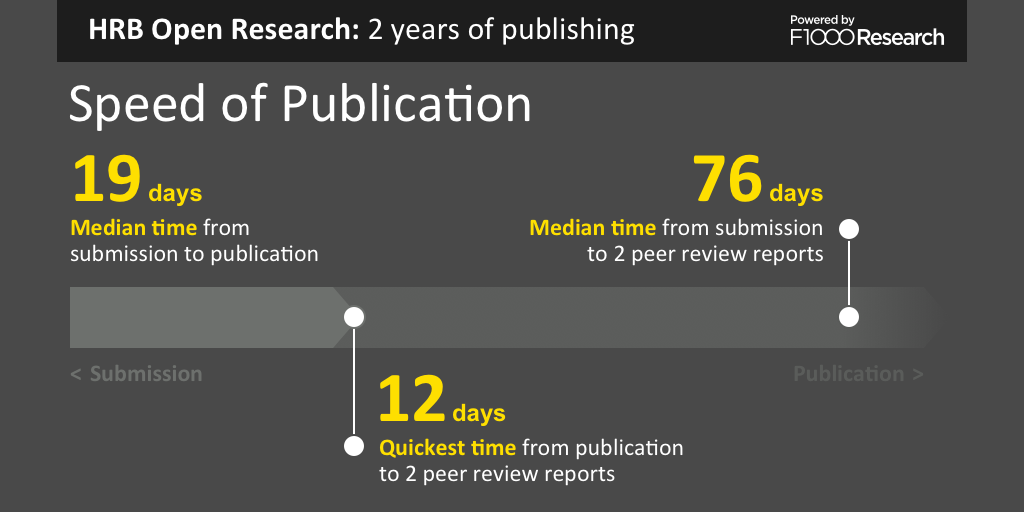
Researchers are favouring us for speed of publication. As you can see, we’re pretty quick, taking 18 days (median time) from submission to publication, and 76 days (median time) from submission to two peer reviews. 12 days is the quickest time from publication to two peer review reports. This is in comparison to general publication times, which can take from 37 to 150 days for a full research article to pass peer review.
Community spirit
In 2019 we launched 3 collections- two thematic: Ageing Populations and Maternal and Child Health and one community based for the HRB-Trials Methodology Research Network. These dedicated hubs enable HRB funded grantees to put all subject specific material in one convenient place and allows promotion of linked content.
We always welcome suggestions for new collections, so do get in touch at info@hrbopenresearch.org if you have any new ideas for content related to a specific community, institution or research area. We hope to be launching more of these over the next year as the platform continues to grow, so keep your eyes peeled!
From strength to strength
Researchers are choosing our platform for its open research and reproducible practices, as well as the ability to publish non-traditional research articles, from Registered Reports to systematic reviews, research notes and more.
We’ve been really enthused that the platform has proved popular for early career researchers, allowing them credit for all their research outputs (small and large!) and to publish transparently and quickly, which can be particularly key early in their careers. Here, are a couple of early career researchers kindly share their thoughts on their experiences of publishing with us.
Lisa Corrigan, University of Dublin, Ireland, published a study protocol, working on a novel approach of standardising the content of yoga interventions to support women during pregnancy.
Why did you publish your article on HRB Open Research?
I published here based on positive reports from colleagues. I also really like the transparency of the publishing process with HRB Open Research and think this contributes to a better peer review experience. In many ways it takes the fear out of peer reviews as they are visible to all to and responses from the authors are welcomed and again visible alongside the reviews.
As an early career researcher how does this platform help you at your stage of your career and development?
It offered me a very positive publishing experience, which often is not the case as an ECR. This positive experience has given me the confidence needed to continue my work and see the value in my research. The world of research publication can be challenging to navigate but HRB Open Research made this easy and it was in fact a pleasurable experience.
Would you encourage others to publish on HRB Open Research?
Absolutely the process from start to finish could not have been more efficient and supportive. I was amazed how quickly my article was edited, published and peer reviewed. I look forward to future publications with HRB Open Research and think it will go from strength to strength.
Aine O’Dea, University of Limerick, Ireland, published a study protocol, looking at the challenges children and young people experience on a daily basis living with developmental coordination disorder/ dyspraxia to help with the design of future interventions.
Why did you publish your article on HRB Open Research?
As a SPHeRE, HRB funded scholar, publishing with HRB Open Research was a good fit. I also believe that the model of open invited peer review is a modern and innovative one that helps to democratise academic research.
As an early career researcher, how does this platform help you at your stage of your career and development?
This platform has provided me with the opportunity to increase the visibility of my research nationally and internationally. I wanted to be able to highlight the need for a systematic review to explore children and young people’s experiences of living with Developmental Coordination Disorder/Dyspraxia. Following the publication of the study protocol on HRB Open, I received an invitation to speak at the DCD/Dyspraxia Ireland Summit March 2020 – “From practice to research and back again”.
Would you encourage others to publish on HRB Open Research?
I would not hesitate to recommend publication on HRB Open Research to any researcher. The process is exceptionally supportive, efficient and timely – I will certainly be using the platform again in the future. The open reviewer process is a very engaging one; it was extremely encouraging and informative to receive feedback from experts in the field of paediatric health.
We hope you find these inspiring and choose to either publish with us again, or to consider us for your next study. If you have any questions about the HRB Open Research platform, please don’t hesitate to get in touch at info@hrbopenresearch.org.