Six tips for publishing research as a new author
| 30 May, 2023 | Abbie nicholson |

Navigating the publishing journey for the first time as a new author or early career researcher (ECR) can be challenging. Whether it’s identifying the right article format and journal for your work, responding to reviewers, or understanding funder and publisher policies—there’s a lot to learn as a first-time author.
When publishing with HRB Open Research, our friendly and experienced editorial team is on-hand to help authors at every step of the journey. Here, we’ve rounded up six tips and tricks for publishing as a first-time author from F1000 Senior Associate Publisher, Hannah Wilson, and HRB Programme Manager, Dr Patricia Clarke.
1. Choose the right article type for your work
One of the first decisions authors must make is the format of their submission.
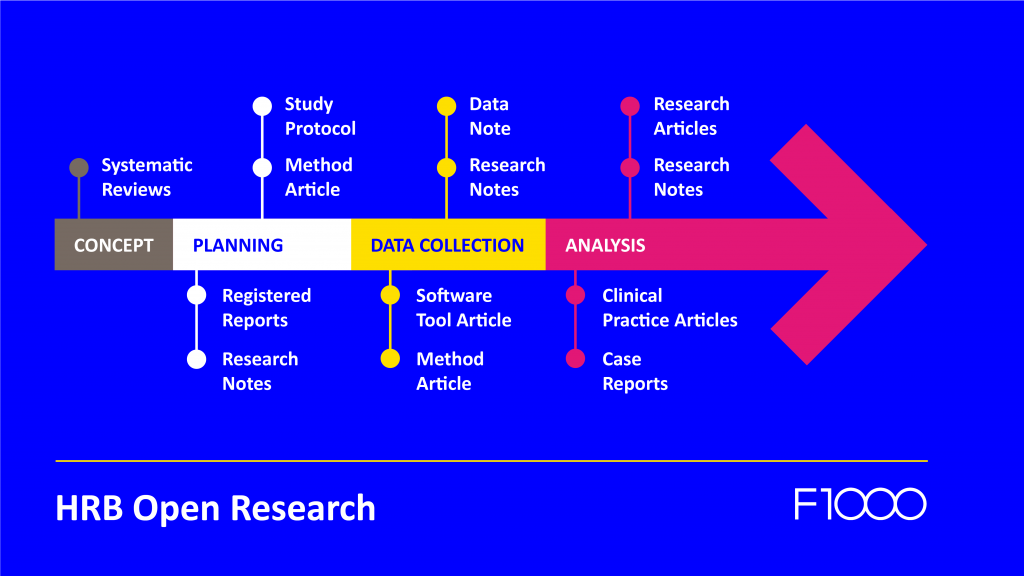
While Research Articles have traditionally been the primary format for publishing research, this might not be appropriate for all types of research. For example, clinical studies may be best represented in a Clinical Practice Article, or innovative data or software best published as a standalone Data Note or Software Tool Article.
As a result, it’s key to understand the different article types available for publishing your research. At HRB Open Research, authors can publish their work as 10 different article types, each of which is designed to support a different research phase.
“It may be that authors choose to submit multiple outputs as different article types across the full research journey, which is certainly what we recommend. In fact, building up your publishing profile by publishing outputs as different article types can help support future publication submissions and career progression.”
- Hannah Wilson, F1000 Senior Associate Publisher
2. Choose the right publishing venue for your work
Coupled with this decision about article format is deciding which journal is best for your research.
This can sometimes be informed by the article type you have chosen, as not all journals will support all formats. Other times it should be informed by the ethos and approach of the journal.
For example, some journals might specifically encourage ECR submissions, some might focus solely on the soundness of science and results, and some might focus on author prestige, reputation, or a high journal impact factor. This last factor can be harder to achieve as a new author.
There are ways to help identify which might be the best option:
- Can you see yourself in the journal’s existing content or authors?
- Are there other authors from your career stage?
- Are there studies of a similar size or methodology?
“It’s also worth considering what’s important to you, whether it’s open access practices, levels of editorial support, or peer review processes. Whatever your goals and values might be, make sure to understand how each journal operates to see how they align with your preferences.”
- Hannah Wilson, F1000 Senior Associate Publisher
3. Develop good relationships with publishing teams
One of the best ways to make your publishing experience as smooth and straightforward as possible is to develop good relations with the publishing team.
“You’ll have communication with publishing teams at multiple stages of the process, from initial checks to proof reviews and queries, so responding in a timely manner and providing comprehensive feedback is key.
Similarly, it’s important to manage expectations with the editorial team if there are likely to be any delays with responses, which can avoid confusion on both sides. If there is likely to be a delay, consider appointing a coauthor who can manage queries on your behalf.”
- Hannah Wilson, F1000 Senior Associate Publisher
4. Respond thoroughly to peer review comments
Peer review is sometimes a daunting prospect for ECRs or new authors. But it’s also a vital opportunity for learning and collaboration and fundamental to research publication.
There are a couple of tricks to getting the best out of the peer review process:
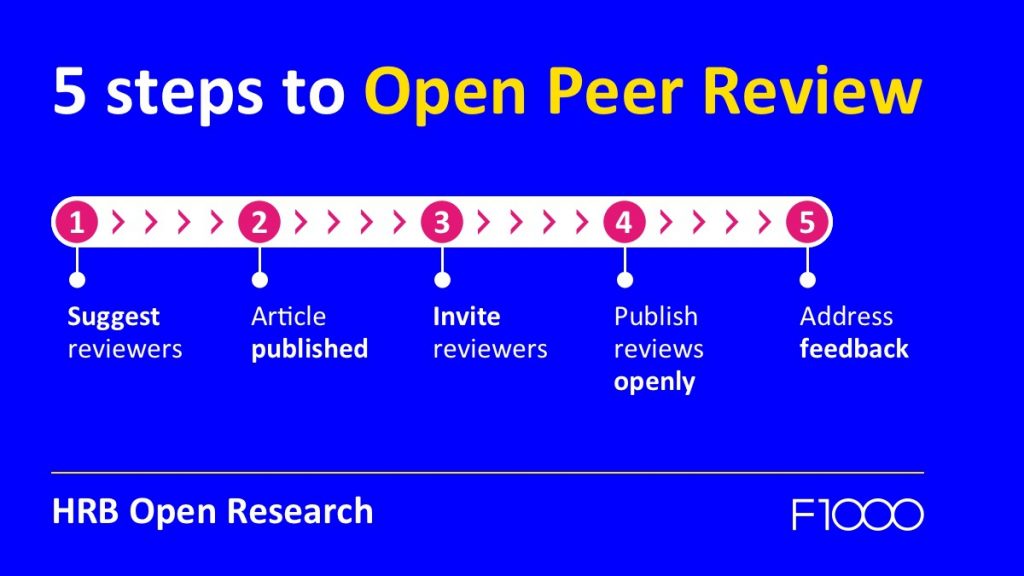
- Address each reviewer’s point in turn and provide a full response, including an explanation of any changes made to the paper following the comment. This is especially important in open peer review, a key element of HRB Open Research, where peer review comments, reviewer names, and author responses are open. By providing detailed responses, you can build a relationship with both your reviewer and your readers, providing more transparency and boosting the credibility of your work.
- You do not always need to agree with your reviewers and should feel empowered to say no, where you feel appropriate. In these instances, you should provide a detailed response explaining why you disagree and use it as an opportunity to provide any further evidence or explanation that may support your response. Reviewers may have expertise in this area, but there are always opportunities for learning on each side.
- Be prepared for multiple rounds of review and revisions. This is normal, and don’t be disheartened by it. Instead, see it as a learning opportunity to improve your knowledge and writing skills from experts in your field.
5. Understand the support available
“One of the best ways to make the publishing experience positive is to understand the support available to you. This can come from several places, whether its institutional librarians, your funder, or the publication venue itself.”
- Dr Patricia Clarke, HRB Programme Manager
Academic institutions have comprehensive support networks in place, including librarians and advisors, who can provide guidance and support to new authors for a myriad of publishing questions.
Similarly, funders, including the HRB, typically have lots of support available. For example, the HRB has a dedicated framework to develop research careers, with specific funding schemes and support in place at all stages of your career.
Finally, the chosen publishing venue itself is a great source of support. HRB Open Research, for example, has an in-house editorial team who can provide guidance and advice across all stages of the publishing journey, from which article type to choose to how to comply with open data policies and identify peer reviewers.
6. Read all policies thoroughly
“Funders and journals alike have their own specific policies. Ensuring you understand and comply with these helps give you the best chance of being accepted for publication, and makes the publishing journey more straightforward.”
- Patricia Clarke, HRB Programme Manager
HRB-funded researchers, for example, must make all publications openly available which have resulted in whole or in part from HRB funding. This includes depositing publications in an open repository, making data and underlying supporting material openly available whenever possible, and providing comprehensive metadata information.
Similarly, HRB Open Research has a number of policies in place when submitting to the platform, including data sharing, ethical requirements around consent, and registration of research where relevant.
Publish your work with HRB Open Research
HRB Open Research provides a dedicated publishing venue for those looking to publish their latest HRB-funded research at no cost to authors.
If you’d like to learn more about the HRB Open Research publishing process, you can find a step-by-step overview on our website. If you have further questions, you can book a short call with Hannah Wilson, Senior Associate Publisher, who will be happy to help.
And, if you’re ready to submit your research to the platform today, find out more about the submission process.