What a difference RAinDRoP makes – the interdisciplinary partnership transforming care across the life span for people and families living with rare diseases in Ireland
| 24 February, 2021 | Suja Somanadhan |
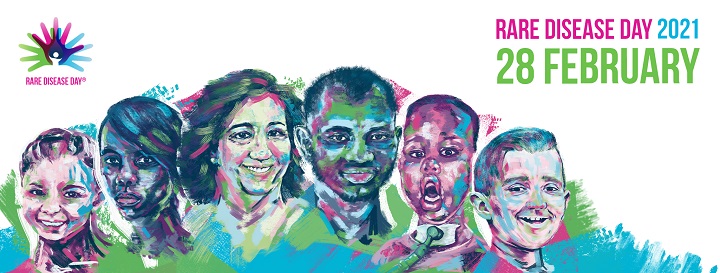
‘Rare is many. Rare is strong. Rare is proud,’ this is the voice of EURORDIS-Rare Diseases Europe and over 60 National Alliance patient organisation partners calling to redefine the word ‘Rare’ in recognition that there are more than 6000 rare diseases and over 300 million people living with a rare disease worldwide. Rare Disease Day takes place on 28th February, and for this global awareness day we hear from Suja Somanadhan, UCD School of Nursing, Midwifery and Health Systems, University College Dublin, Ireland, who educates us about rare diseases and informs us about Rare Disease Research Partnership (RAinDRop), of which she is both the founder and lead, responsible for bringing together a wide variety of diverse voices in the rare disease community in Ireland.
Read Somanadhan’s story to hear about the importance of collaborative work and listening to the expertise of patients and carers to identify a set of research priorities for rare disease in Ireland, as published in her Research Article on HRB Open Research.
Introducing the Founder of RAinDRop
My name is Dr Suja Somanadhan; I am currently working as an Assistant Professor in Children’s Nursing and a researcher at the UCD School of Nursing, Midwifery & Health Systems. I have over 20 years of clinical experience in paediatric health care settings with a particular interest in rare diseases and children with complex needs. My doctoral research study was the first of its kind to act as an initial enquiry into the lived experience of Irish parents of children, adolescents and young adults with Mucopolysaccharidosis (MPS).
How do you define a rare disease?
Rare diseases tend to be defined according to the incidence of the disease; hence European member states define them as a disease or condition that affects fewer than 1 in 2,000 individuals while in the US, it is defined as affecting fewer than 200,000 affected individuals or about 1 in 1,500 people.
Globally, approximately 350 million people live with a rare disease with between 27 and 36 million, 6-8% of the EU population, residing in Europe. These statistics, combined with the variety of rare diseases, 8000 distinct diseases, means that they create a significant public health issue in Europe and worldwide. Arguable, rare diseases are individually rare yet collectively; they are common in society.
To date, 80 % have a genetic origin, and most are chronic with life-threatening co-morbidities, affecting at least 300,000 individuals in Ireland. Examples of rare diseases include cystic fibrosis, Ireland’s most common genetic (inherited) disease. It primarily affects the respiratory and digestive systems in children and young adults.
Phenylketonuria, or PKU, is another common rare genetic disorder in Ireland that affects a person’s metabolism. Ireland has one of the highest incidence rates of PKU with approximately one in every 4,500 babies born in Ireland has PKU. Mucopolysaccharidosis (MPS) is one of the many rare inherited metabolic disorders that come under category 3 of life-limiting conditions. 50-75% of all rare diseases affect children, and sadly 30% of children with a rare disease die before their fifth birthday due to life-threatening or life-limiting nature of the illness.
The challenges we face
The low prevalence and considerable heterogeneity of rare diseases make it challenging to focus specifically on rare individual conditions. Rare diseases pose particular challenges for affected individuals and their families regarding the diagnostic process and getting the right diagnosis, treatment, and optimal care.
Clinicians who care for affected individuals with rare diseases face numerous challenges, such as gaining knowledge and experience in caring for such patients, and the availability of local experts and expert clinical guidelines. Recent developments in treatments for some forms of Rare Diseases have dramatically changed the quality of life (QoL) for some patients. Other forms of treatment are currently under investigation and development. Most rare diseases (estimated to be 95% of rare diseases) still do not have an approved treatment.
Placing families and patients at the heart of research efforts
The Rare Disease Research Partnership (RAinDRoP) was established in 2018 as a collaborative research partnership consisting of basic scientists, applied researchers, health and social care professionals, patients, advocacy and support organisations and families affected by rare diseases. RAinDRoP evolved with the support of the HRB, which funded the prioritisation exercise in 2019. RAinDRop, contrary to exclusive genetic or biomedical research, places the families and patients at the centre of research efforts. It focuses on the impact of a rare disease on the health, well-being and social lives of individuals and families living with rare conditions. It is not so much a particular diagnosis that matters but the consequences of that diagnosis and the characteristics and treatments of the rare disease for families over the life course.
The collaborative partnership employed by RAinDRop identified research priorities for rare diseases through a multi-phase process that required close and continuous involvement of people living with rare diseases, their families, carers and healthcare professionals to improve quality long-term management, of rare diseases.
These research priorities also mirrored some of the key recommendations that emerged during the consultation processes that informed the National Rare Disease Plan for Ireland (2014-2018). The RAinDRoP partnership will facilitate further rare disease-focused research, actively influence policy and research funding streams, and strengthen research collaborations with European and global partners.
The patient and carer’s voice takes centre stage
The lived experience of patients and their families make a unique contribution to the understanding of rare diseases. Research prioritisation via RAinDRoP needs to harness this expertise by ensuring that the patient and carer’s voice is placed at centre stage. A high level of patient and family involvement at this early stage of the research process strengthens collective commitment and focus, ensures transparency and accountability of all stakeholders, and provides a pathway to meaningful, impactful research. Building a lasting relationship among researchers, professionals, individuals and their families, based on mutual trust, self-awareness, and inclusion enhances collaboration and open and transparent communication.
Priorities and impact
Here are the Top 10 RAinDRoP research priorities identified:
- Support at the time of a rare disease diagnosis
- Diagnostic tests for rare diseases (e.g. use of genetics, stratified medicine/molecularly targeted therapies, gene therapy etc.)
- Education and training (e.g. health and social care professionals, school, GP and patient information and understanding of their illness and management)
- Listening to the patients’ voice (e.g. how to include the child’s voice about their care)
- Data sharing and integration of services for rare diseases
- Explore the economic impact of living with a rare disease (e.g. healthcare costs, transportation costs, education costs, loss of earnings, etc.)
- Explore the psycho-social impact of living with rare diseases (e.g. physical functioning, psychological, social and mental health and quality of life etc.)
- Community-based services and treatment for rare diseases
- Explore evidence-based models of integrated care for rare diseases
- Evaluate family experience of living with a rare disease (e.g. parents, mother, father, siblings and grandparents experiences of living and caring and life-course transitions)
Learning from the insight and expertise of families
RAinDRoP participatory engagement utilising the PPI approach builds trust between research institutions and society. Involving patients and the public in the RAinDRoP research project has demonstrated that their involvement helped to identify the lack of evidence in addressing the impact of living with a rare disease on these families. The identified research priorities emphasise the need for open and transparent communication and support of families.
Using a PPI approach, we can learn from families what is explicitly needed and at what point in the patient journey. Families and patients can tell us which information they need and what formats would be appropriate. Their insights and expertise can focus research on areas that have thus far been mostly untapped. We urgently need to strengthen the long-term supports, be it in terms of psychological counselling, improved integration of health and social care services or tackling families’ economic impact.
Sharing and accessibility of health data
As in other areas of the Irish health system, data sharing across institutions, among professionals and between families and health and social care practitioners is a significant obstacle in providing timely, continuous and integrated services. This is magnified for families living with a rare disease as our consultation exercise has highlighted. Involving patients and families along with other stakeholders can highlight what information should be shared and how this can be best achieved safely and confidentially. The Finnish health care system, for example, allows patients to access and actively contribute to the e-health records that stay with them over the life course.
Deciding when and what to publish
I was looking for a platform with a quick turnaround in terms of review, feedback and publishing. Moreover, as the funding cost was covered, it allowed me to focus on impact, peer review corrections, editorial guidance and updates. The submission process was open and transparent, and as an author, I had the choice of publishing when I felt my study was ready for it. The additional visibility and support from an esteemed organisation like HRB Open Research were key to making study findings publicly available in a concise space of time.
There are many benefits to publishing in Open Peer Review, including supporting the transition to Open Science by making all aspects of the research process more transparent. In this platform, authors decide when to publish and what to publish, rather than editors. The cost of publication, visibility, rapid process, and research reproducibility make this type of publishing stand out as a preferential method of publication.