FAIR data management: A new funding requirement, but a pre-existing research necessity
| 29 March, 2019 | Brendan Palmer |

Brendan Palmer, HRB Clinical Research Facility Cork, shares his experience of participating in the GO-FAIR training programme and the value gained by data stewardship among the research community.
The Statistics and Data Analysis Unit (SDAU), at the HRB Clinical Research Facility Cork where I work, provides statistical support for clinical investigators at all stages of the research process.
We use Open Science workflows that promote research integrity and reproducibility. Increasingly we are approached by researchers with queries relating to data management, GDPR and FAIR data.
In 2018, the Health Research Board (HRB) introduced the requirement for FAIR data management statements as part of their grant calls. But what are the FAIR guiding principles? In short, it is an umbrella term describing the steps required to make data Findable, Accessible, Interoperable and Re-usable
Putting the spotlight on data
The spotlight is now on the data that the research relies on. Unfortunately, research data objects are often lost or discarded at the end of a study, despite their continued value. Long term preservation of the data is at the discretion of the study Principle Investigator; who also decides who gains independent access to validate the study findings.
Considering the time, effort and cost of the data collection process, poor data management is perhaps the single largest source of research waste. Funders are increasingly aware of this loss and researchers are seeking alternative research outputs to traditional journal publications. Open Science initiatives are in place to acknowledge data provenance and offer a means to store research data, but many researchers are unfamiliar with the correct processes to follow.
It is a challenge for researchers to keep pace with emerging practices, especially where there is little, if any, dedicated local support. So where can they go to begin their own FAIR data management journey?
GO FAIR training programme
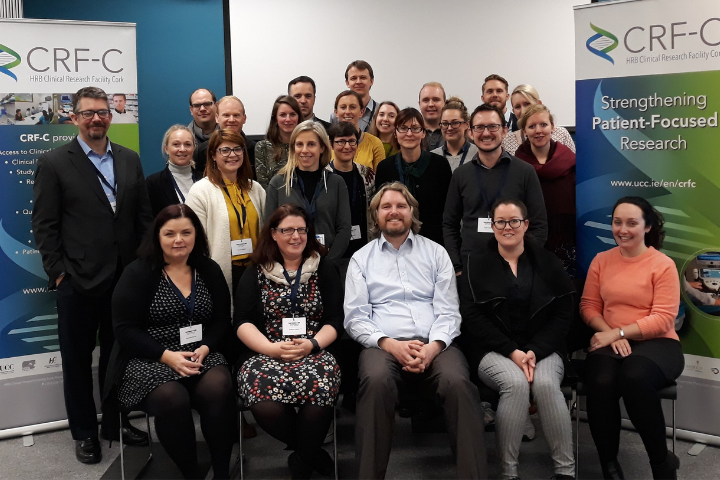
As part of HRB’s FAIR data programme, staff from Higher Education Institutes were given the opportunity to attend an introductory workshop on FAIR data, which was organised and run by GO FAIR in Leiden, the Netherlands. Speakers at the workshop included lead authors from the Wilkinson et al., (2016) publication outlining the FAIR guiding principles and attendees were providing with broad insight into the benefits and potential of FAIR data.
The three main outcomes from this event were the realisation that:
- There are multiple levels of ‘FAIRness’ the data can achieve,
- FAIR is not a set standard
- FAIR is not equal to ‘open’ (i.e. data could be closed yet perfectly FAIR).
Researchers should consider these five key headings:
- How the data will be collected (format, volume, method),
- What metadata is to be used,
- What are the storage/backup options,
- Addressing the ethical considerations
- Can the data be shared beyond the lifetime of the project.
Combined, these five headings not only create a roadmap towards making the data FAIR, but also complement the quality of the research through enhanced data integrity and awareness. As researchers gain greater confidence in implementing the FAIR data guiding principles, support tools will emerge to facilitate more streamlined processes. One such example nearing completion is the FAIR Data Stewardship Wizard. The presence of repositories such as figshare or Zenodo allow for digital object identifiers to be assigned to data sets. Indeed, whole research projects can be managed and published through the Open Science Framework.
Already adoption of FAIR by the HRB and other funding bodies has led to new local initiatives gaining purchase. Last Autumn, we ran a successful three day Open Science workshop at University College Cork (UCC) that combined lectures from leaders in the field of Open Science, with hands-on practical sessions in reproducible reporting, pre-registration and registered reports.
In partnership with the UCC Research Office and UCC library, we will be launching a digital badge in Responsible Conduct of Research this coming Autumn. Events like these are raising awareness of emerging best practices in research and putting in place the foundations for the growth of local user networks.
It has been estimated that researchers currently spend approximately 79% of their time on some aspect of data preparation, whether this is collecting, cleaning or organising it. To implement a comprehensive FAIR data stewardship plan, data services operators/ engineers will be required to develop tooling and apps and infrastructure at institutional level.
The European Commission envisage that 5% of total research expenditure would be required to properly finance such a service. For now, the responsibility rests on the individual researcher together with the support and guidance of local data stewards. This has practical benefits in the short-term, making your published research more visible, robust and reproducible.
It is also a future investment. Data has been described as the new oil, and FAIR data is potentially a boundless and renewable resource fuelling new collaborations, new investigations and new discoveries.