The Health Research Board is committed to supporting a data sharing environment in Irish research
| 29 January, 2019 | Aileen Sheehy |

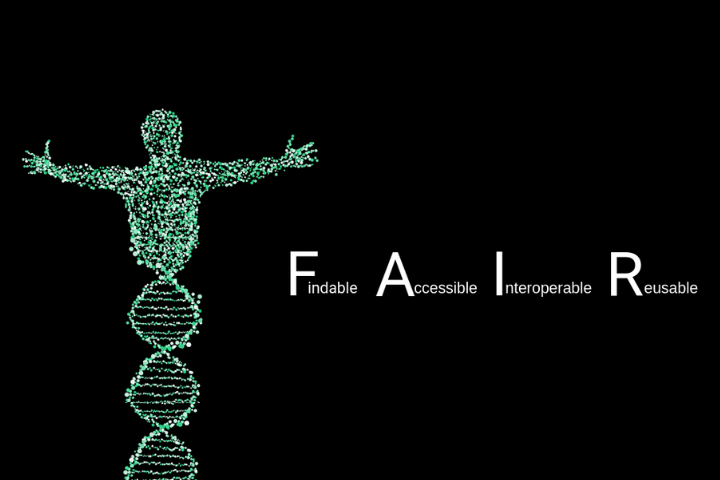
HRB Open Research endorses the FAIR Data principles to make data Findable, Accessible, Interoperable and Re-usable. Aileen Sheehy, Data Policy Programme Officer at the Health Research Board, Ireland, tells us more about the Health Research Board‘s (HRB) commitment to openly sharing data, and the initiatives being set up to support this and data reuse. Avril Kennan, from the Medical Research Charities Group, Ireland, shares her views on data and its use in health and social care, given her review of an open letter published on HRB Open Research.
The sharing and re-use of research data is a vital part of health research. Ensuring that data from research is made widely available helps to accelerate the progress of research and improvements in health, and also improves reproducibility and the integrity of research.
The HRB is committed to supporting the Irish research community to achieve high standards in data sharing and data re-use.
Recent developments
The HRB Open Research publishing platform has recently updated its data sharing policy to promote the broadest reuse of research data. The policy has always promoted open data by requiring that all source data underlying research results be made available. There is recognition in the policy that in some instances, this may not be possible, especially in cases where the privacy of participants is at risk.
The updated policy now endorses the FAIR (findable, accessible, interoperable and reusable) Data Principles to enhance the reusability of data shared through the platform. These principles are seen as best practice for how research data should be shared. It is hoped that these changes will help to improve reproducibility and transparency of research published through the platform by not just making the data accessible, but also improving the quality of data being shared.
A taste of what is coming this year
The HRB has several other initiatives in the pipeline for 2019 to support data sharing and reuse in Irish health research.
So far this year, we’ve launched a Secondary Data Analysis Projects funding call that aims to support the secondary reuse of data that tackles policy and/or practice-relevant questions related to health.
Later this month (January), we will announce a new call to develop a proof of concept of technical infrastructure to inform a national solution for the safe controlled access, storage, sharing and linkage of research data and routinely collected health and social care datasets.
Finally, we will be continuing with our pilot to train and support Ireland’s first FAIR data stewards. These stewards are based within a variety of research institutions across the country. This pilot is a collaboration with the GO-FAIR International Support and Coordination Office (GFISCO) in Leiden.
Initiatives such as these aim to build a strong enabling environment for health research across Ireland and support our researchers to achieve the most out of the valuable data they have collected. This is just a taste of what’s in store for the HRB in 2019 to support our research community to share and reuse high quality data.
The use of data for health and social care
In an open letter published on HRB Open Research, the UCD PPI Ignite executive committee raise concerns with the Data Protection Act 2018. One of their concerns is the potential conflict between open data, data sharing and purpose-bound consent, given the health research regulation where individual’s provide explicit consent in advance of their personal data being processed for specified health research.
Avril Kennan, from the Medical Research Charities Group, Ireland, reviewed the article and here she discusses how the Data Protection Act relates to the FAIR data principles and the need to balance the use of health data with the need for data privacy.
How does the Data Protection Act relate to FAIR data principles?
Meeting the FAIR data principles, while also remaining compliant with data protection legislation will present headaches for researchers. Both require new ways of working that are sometimes at odds with each other and little guidance exists on how to resolve these tensions. Not only that, but the application of both data protection legislation and the FAIR principles require skill sets that are new for many researchers, such as those relating data stewardship and the interpretation of legislation.
We are asking more than ever of our health researchers and we can’t leave them to figure it all out by themselves. It’s important that they are given increased support at institutional level and also that the wider health research community come together to reach common understandings and share best practice. For example, by researchers becoming more aware of the FAIR data principals, they will be better placed to inform patients as to the possible uses of their data, which will help them in complying with data protection legislation.
Why is it important to bring the public-patient perspective to this debate?
For patients and the public, the application of the FAIR guiding principles means that more value can be gleaned from data they have shared for research purposes, leading to an increased likelihood of benefit to them and others like them. However, as we all become more astute about our personal data, they also want reassurance that their data is not being used for purposes for which they have not consented.
There is a fine balance between making the best possible use of health data and not abusing the generous gift of the person that donated it. As health researchers navigate their way through a myriad of data protection versus data sharing scenarios, it will be essential to understand the perspectives of the patients and members of the public whose data is in play. These are the people for whom most is at stake and their views will help guide the community to sensible approaches.